
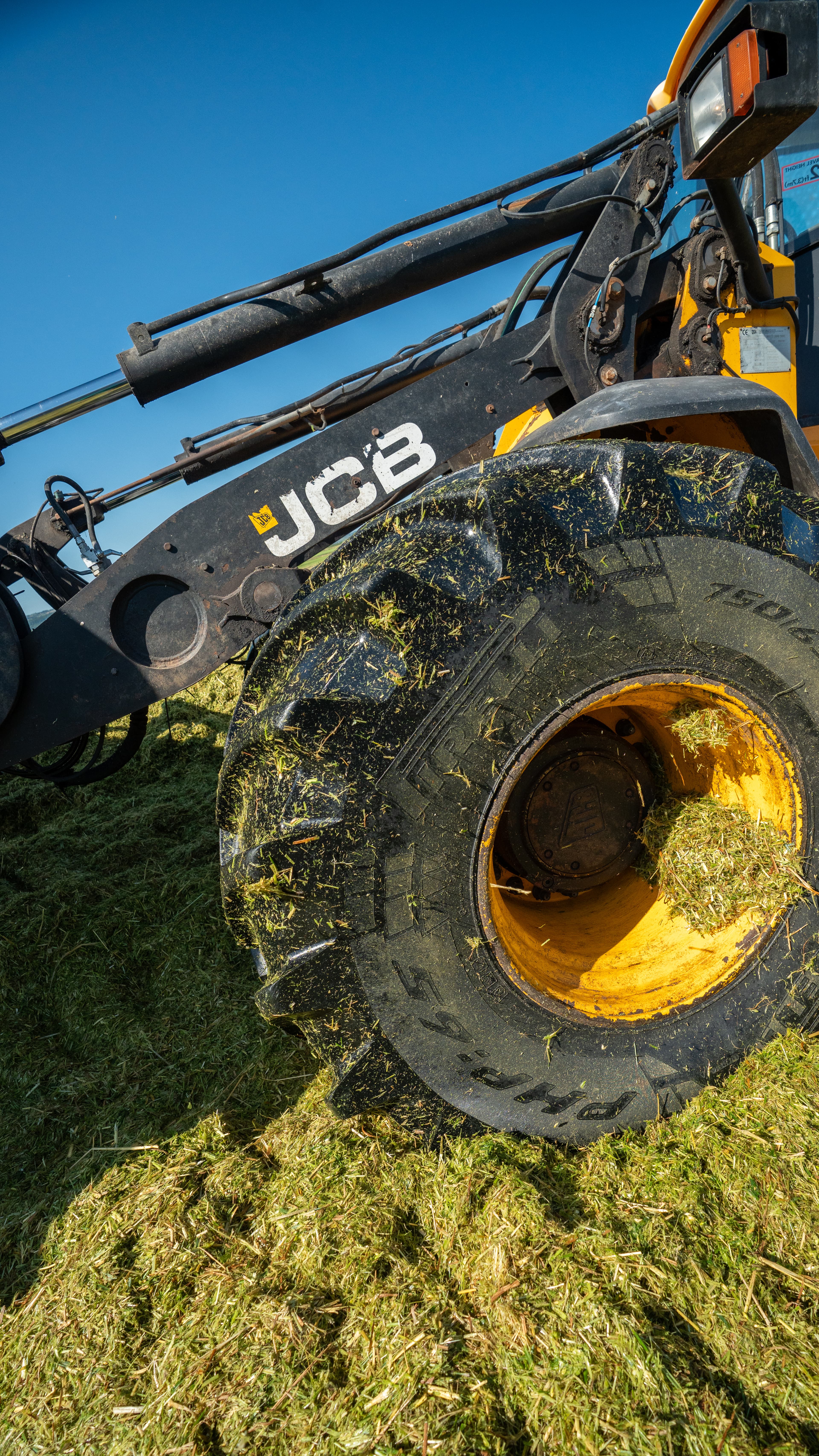
Slippage in silage clamps is rarely caused by one single factor. It usually develops when crop characteristics, fermentation behaviour and clamp management combine in an unfortunate way.
Modern multi-cut systems, high sugar grasses and fast fermentations can all increase the likelihood of internal movement if physical structure is not managed carefully.
Why Slippage Risk Increases in Modern Systems
- Young grass has high sugars, high buffering capacity and soft fibre
- Strongly lactic fermentation can increase moisture retention inside the silage
- Multiple cuts create internal layers that can act as natural slip planes
- Wedge clamps concentrate load unevenly, increasing internal shear forces
What's Happening Inside the Clamp?
When young grass ferments very strongly towards lactic acid — especially in crops with high buffering capacity — the silage tends to hold more moisture within the material. Put simply, lactic acid tends to hold onto water.
That moisture doesn't always drain away. It can sit between chopped particles and between layers like a thin film.
In layered clamps, this can create small zones where moisture, lactic silage and small pockets of trapped air sit together. These areas can become slightly weaker and more slippery than the surrounding material. Under the weight of the clamp, those zones can behave like natural slip points, especially where different cuts meet.
This does not mean lactic acid is "bad" — it is essential for preserving silage. However, very lactic-dominant fermentation in soft, wet, high-buffer crops can create physical conditions that increase the risk of internal movement and slippage.
That is why physical management still matters.
Management Factors That Influence Stability
- Thin layering and good consolidation improve internal cohesion
- Avoid very wet early cuts where possible
- Layered clamp profiles distribute load more evenly than steep wedges
- Safe face management reduces internal stress
- Chop length influences how well the material interlocks and "knits" together
Soft young grass already compacts easily. Extremely short chop often adds little extra benefit but can reduce internal fibre interlock.
Fermentation Balance as Prevention
Good silage is not simply about maximum speed or maximum lactic acid.
Balanced fermentation helps:
- Avoid excessive moisture retention and lubrication
- Improve consistency between layers
- Support predictable anaerobic stability
- Reduce the likelihood of weak internal zones developing
If the Worst Still Happens...
Even with good management, farming always carries variability. Weather, harvest pressure, contractor timing and crop conditions do not always line up perfectly.
Where slippage or disturbance does occur, having biologically resilient silage becomes important. Stable fermentation helps slow heating, suppress spoilage organisms and protect feed quality while corrective management steps are taken.
Where Safeguard 6 Helps – Prevention and Protection
Helps reduce the risk developing (prevention):
- More balanced fermentation supports internal cohesion and clamp stability (reduced lactic acid, increased acetic acid for spoilage inhibition)
- Improved consistency across layered silage interfaces
- Faster establishment of controlled anaerobic conditions
Helps protect silage if disturbance occurs (resilience):
- Improved aerobic stability when faces or internal layers are disturbed
- Suppression of spoilage organisms and pathogens
- Slower heating and more consistent feed-out during recovery
Good management reduces risk — Safeguard 6 adds biological resilience when real-world conditions don't always go to plan.
Appendix – Why Chop Length Matters in Young Grass
- Soft young grass already compacts easily, so extreme short chop often delivers little extra benefit
- Very fine chop increases fermentation speed and lactic dominance
- Short fibres interlock poorly, increasing slippage risk in layered clamps
- Moderate fibre length improves internal knitting, clamp stability and rumen fibre effectiveness
Ready to Upgrade Your Silage?
Discover how Safeguard 6 can protect your silage, reduce waste, and improve feed quality.