
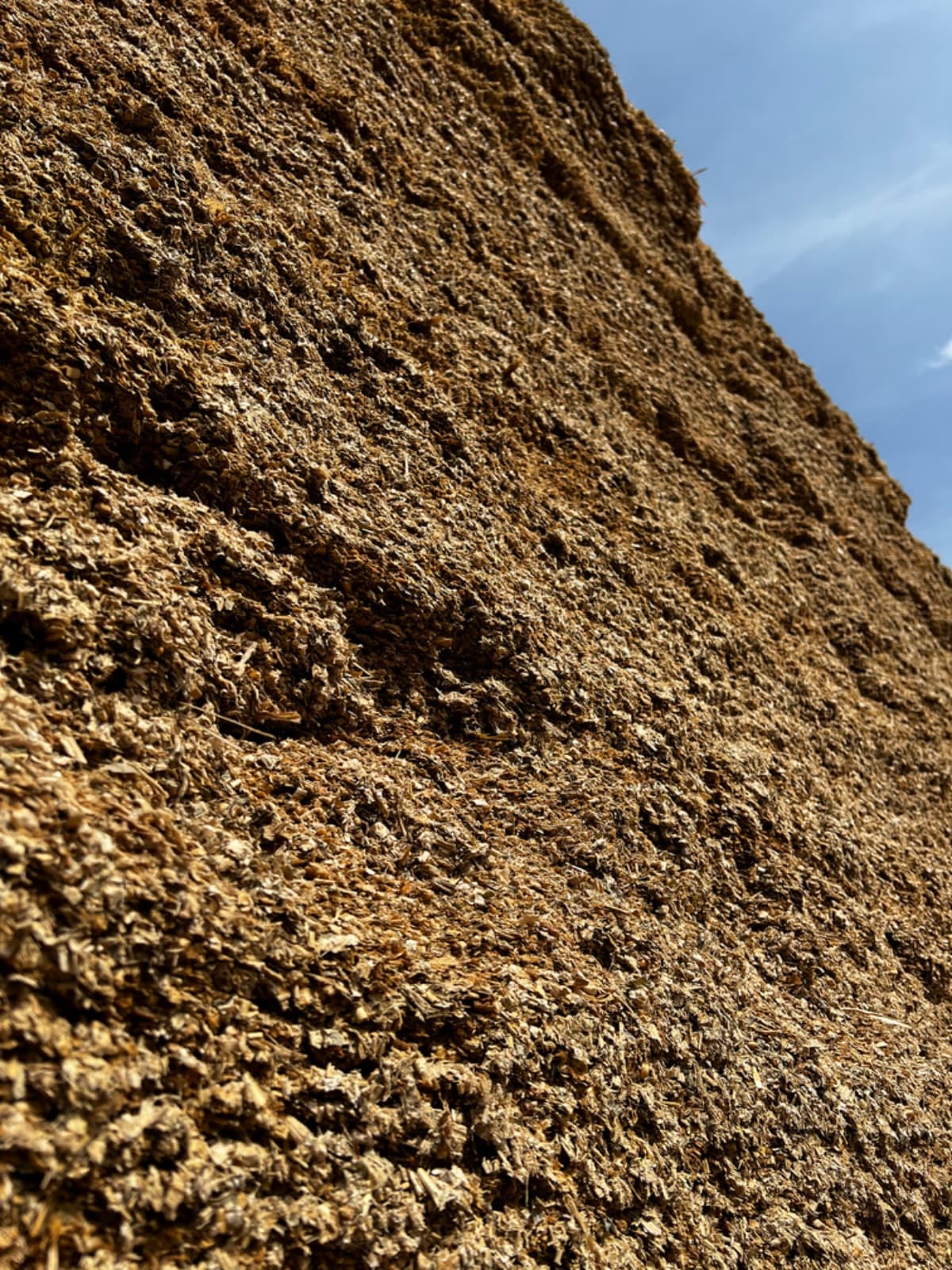
Modern UK dairy systems target 11.5-12.5 MJ ME, more than 16% crude protein and high D-values through intensive 4-5 week multi-cut programmes. Maximising sugars and fibre digestibility is central to milk economics.
However, this high-octane grass introduces unforeseen biological vulnerabilities once air hits the clamp face.
The Soil Legacy: Trace Element Depletion
Since the 1960s, continuous dry matter removal supported by standard NPK applications has steadily mined trace elements from UK swards. Fast-growing perennial and Italian ryegrass monocultures act as intensive nutrient pumps, drawing out cobalt (Co), copper (Cu), zinc (Zn) and manganese (Mn) faster than the underlying rock can weather to replenish them.
Compounding this, routine liming to maintain a soil pH of 6.2-6.5 - vital for grass dry matter yields - locks cobalt and manganese into insoluble forms that plant roots cannot absorb.
From Soil to Slip: The Four-Step Pathway
- Step 1Soil DepletionHeavy NPK + limingHigh pH locks up Mn & CoTrace element vacuum
- Step 2Biological VoidInadequate Co for vitamin B12Mn shortage weakens LABNo antifungal brake
- Step 3Rocket FuelHigh WSC (free sugars)High leaf NDFd, low stemInstant food for yeasts
- Step 4Instability & SlipYeasts burn lactic acidpH spikes and the face heatsSlick matrix shears
The Biological Vulnerability: Missing Bacterial Co-factors
Manganese and lactic acid bacteria survival
Unlike aerobic spoilage microbes, lactic acid bacteria (LAB) lack a classic superoxide dismutase enzyme. Instead, they rely on high internal concentrations of manganese (Mn²⁺) to neutralise reactive oxygen species and survive initial oxygen exposure. Manganese is also an obligatory co-factor for lactate dehydrogenase, the enzyme at the heart of lactic acid production.
Cobalt, vitamin B12 and acetic acid
Heterofermentative bacteria such as Lactobacillus buchneri convert lactic acid into antifungal acetic acid. Key enzymes in this pathway (diol dehydratases) are dependent on cobalamin - vitamin B12. Severe cobalt deficits prevent the crop's natural microflora from mounting a chemical defence against yeasts.
Clamp Slippage: When Physical Structure Meets Secondary Spoilage
Clamp face slippage is an acute safety hazard and an economic catastrophe. In modern multi-cut silages cut at 4-week intervals, grass has minimal lignified stem skeleton. Under heavy rolling, tender cells rupture into a dense, soap-like consistency.
When oxygen invades, yeasts devour lactic acid and raise the pH. Secondary organisms then dismantle the remaining plant cell structure, turning the silage into a slippery layer. Under outward gravitational pressure, internal friction fails completely and the clamp face shears forward onto the concrete apron.
Practical Audit: Operational Standards for Modern Silage
| Audit Parameter | Target Value | Corrective Action |
|---|---|---|
| Herbage cobalt | > 0.15 mg/kg DM | Apply foliar cobalt sulphate or a trace element rectifier 10-14 days before cutting. |
| Herbage manganese | > 40 mg/kg DM | Address lime lock-up with foliar manganese; check soil pH is not excessively elevated (above 6.5). |
| Crop dry matter | 30-35% DM | Wilt rapidly (under 24 hours) to reach 30% DM or more, preventing cell sap lubrication and effluent slip planes. |
| Chop length | 25-40 mm (leafy crops) | Avoid over-chopping low-fibre leafy swards to preserve structural friction in the clamp. |
| Top surface seal | EVOH barrier underlay | Replace standard black polythene with dedicated barrier film and weight the perimeter with gravel bags. |
| Face speed | ≥ 1.5-2.0 m/week | Match clamp width to the winter feed-out rate and shear-grab cleanly without disturbing face integrity. |
Apply foliar cobalt sulphate or a trace element rectifier 10-14 days before cutting.
Address lime lock-up with foliar manganese; check soil pH is not excessively elevated (above 6.5).
Wilt rapidly (under 24 hours) to reach 30% DM or more, preventing cell sap lubrication and effluent slip planes.
Avoid over-chopping low-fibre leafy swards to preserve structural friction in the clamp.
Replace standard black polythene with dedicated barrier film and weight the perimeter with gravel bags.
Match clamp width to the winter feed-out rate and shear-grab cleanly without disturbing face integrity.
Non-Negotiable Clamp Management Protocols
Eliminate oxygen ingress
Standard 125μm black polythene is gas-permeable. Dedicated EVOH oxygen-barrier films suction directly onto the grass profile, eliminating top-layer spoilage and depriving yeasts of atmospheric oxygen.
Compaction and layer discipline
Consolidate in thin layers of no more than 15 cm. Rolling thick wedges leaves internal air pockets that incubate yeasts long before the pit is unsealed.
Where Safeguard 6 Helps
Good soil nutrition and clamp discipline lay the foundations. Safeguard 6 adds biological resilience on top:
- More balanced fermentation, with reduced lactic acid and increased acetic acid for spoilage inhibition
- Improved aerobic stability when the clamp face is opened or disturbed
- Suppression of yeasts and spoilage organisms, with slower heating during feed-out
The Takeaway for Modern Dairy Units
High-sugar, high-D-value grass is essential to drive 35-45+ litre herd performance from forage. We cannot and should not retreat on quality. But high-octane forage is inherently volatile.
By addressing soil micronutrient deficits and enforcing rigorous, airtight clamp discipline, producers can preserve every unit of energy they grow.
Ready to Upgrade Your Silage?
Discover how Safeguard 6 can protect your silage, reduce waste, and improve feed quality.